

When your child announces they want to play rugby, it’s perfectly possible to feel pleased and worried at the same time. Fresh air, teammates and something to do that doesn’t involve a screen? Lovely. Watching them get tackled? Slightly less relaxing.
As a dad who coaches under-7s rugby, I’m certainly not going to tell you the sport has nothing to offer. But “it never did me any harm” isn’t a safety policy, either.
The honest answer is that tackle rugby carries a real risk of injury, including concussion. Non-contact versions remove deliberate tackling, although falls and accidental collisions can still happen. Your child’s age, the format they play and how sessions are run all matter.
Start With the Rugby They’ll Actually Be Playing
Watching international rugby won’t tell you much about a six-year-old’s first session. Children aren’t simply handed a smaller shirt and invited to recreate the Six Nations.
In England’s rugby union pathway, under-7s and under-8s play non-contact rugby. Tackling is introduced at under-9 level, with other elements added as players progress.
Those are English rugby union rules: rugby league and other countries have their own pathways. Ask the club what your child’s age group actually does, rather than relying on the word “rugby”.
Tag and touch formats let children practise running, passing, finding space and working together without bringing opponents to the ground. They’re worth considering in their own right, not just as something children must eventually “graduate” from.
Starting with non-contact rugby also doesn’t commit your family to tackling later. You can revisit that decision when the time comes.
What Are the Main Injury Risks?
Bruises, sprains, fractures and head injuries can occur in rugby. Once tackling enters the picture, contact becomes an important part of the risk.
A study published in 2024 followed boys’ teams at 35 English schools over three seasons. Contact events accounted for 87% of injuries with a known cause, and tackles were the leading injury event. Concussion was the most common injury type across the under-13, under-15 and under-18 groups.
That deserves attention. However, these were schoolboy tackle matches, using data collected between 2017 and 2020. The findings don’t tell us the injury risk for a seven-year-old playing tag, or provide an exact prediction for your child.
They do explain why “all sports have risks” isn’t a complete answer. It’s true, but the type of risk matters. Better coaching and sensible rules can help manage rugby’s dangers; they cannot make collisions harmless.
Concussion Is the Bit Every Parent Should Understand
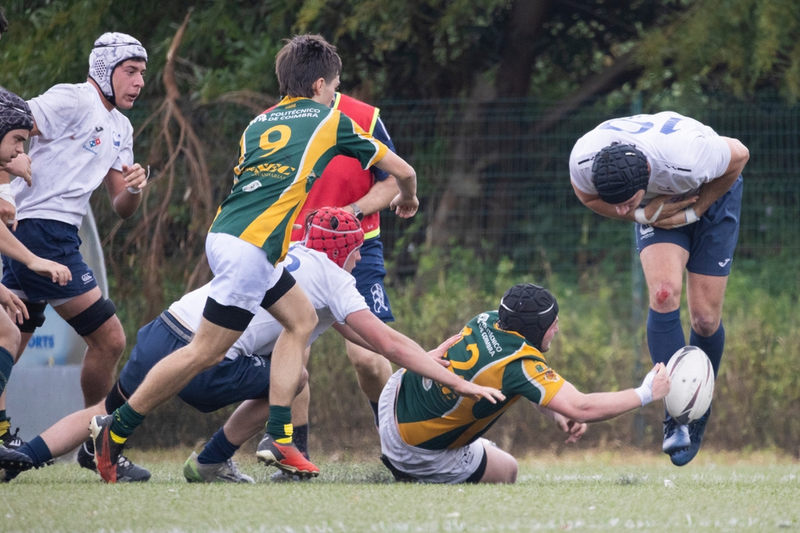
Concussion is a brain injury. A child doesn’t need to be knocked unconscious to have one, and a blow to the body can cause it if the head moves suddenly.
Signs can include headache, dizziness, confusion, memory problems and poor balance. Symptoms may also appear later, so seeming fine immediately afterwards doesn’t settle the matter.
If concussion is suspected, the child must stop playing immediately and must not return that day. Arrange assessment by an appropriate healthcare professional; NHS 111 can advise if you’re unsure where to go. Don’t wait for routine advice if there are emergency symptoms.
Call 999 if, after a head injury, they cannot stay awake, have a seizure, develop weakness or have difficulty walking or speaking. Repeated vomiting or a worsening headache also needs urgent medical attention.
Returning to rugby should follow medical advice and the sport’s graduated return programme. In English community rugby, return to matches is no earlier than day 21, and only after the required recovery stages and symptom criteria are met. It isn’t automatic clearance when the calendar reaches three weeks.
Tell school and any other sports clubs, too. Missing rugby while playing football the following morning rather defeats the point.
The longer-term effects of repeated head impacts are another legitimate concern. We shouldn’t promise parents that childhood contact rugby has no lasting risks, or pretend we can predict an individual child’s future from one knock.
Look Closely at the Club’s Approach
Before signing up, I’d watch a session and talk to the coach. Not to conduct an interrogation worthy of a police drama, but to understand who’s looking after your child.
Useful questions include:
- What training have coaches completed for this age group?
- How do you introduce contact and assess whether children are ready?
- How do you manage differences in size, experience and confidence?
- Who provides first aid, and what happens after a suspected concussion?
- How do you record injuries and communicate with parents?
The answers matter, but so does what you see. Are instructions clear? Are unsafe tackles stopped? Can a nervous child take a step back without being embarrassed?
I’d be reassured by a coach who takes concerns seriously. I’d be much less comfortable with anyone whose response to an injured child is essentially “toughen up”.
Check the Kit, but Don’t Expect Armour

A properly fitted mouthguard helps protect teeth and surrounding soft tissues. Suitable boots and well-maintained equipment matter, too.
Scrum caps can protect against cuts and injuries to the ears, but they have not been shown to prevent concussion. Buying one doesn’t turn your child into a miniature crash-test vehicle with improved safety ratings.
Equipment supports sensible coaching and injury management. It cannot replace them.
So, Should You Let Your Child Play?
I wouldn’t make the decision from a frightening headline, but I wouldn’t dismiss a genuine concern because rugby is a sport I enjoy.
There’s plenty to value: learning skills, making friends, being active and contributing to a team. Those opportunities are available through non-contact rugby and other sports as well.
Ask your child what they enjoy and what worries them. A child who loves passing and running but dislikes tackling hasn’t failed some character test. Choosing touch rugby, taking a break or finding another activity is perfectly reasonable.
If they want to play tackle rugby, understand the risks, check the coaching and insist that injuries are taken seriously. If they have previous concussions or relevant medical problems, discuss participation with their clinician.
Our job isn’t to raise children who never take a risk. It’s to help them find things they love while making informed decisions about the risks they take.