

If you are a dad, you already know that the morning school run is an extreme sport that requires the logistical precision of a military operation. Between locating inexplicably missing shoes, attempting to make presentable toast, mediating sibling arguments over who gets to sit in the front seat, and trying to get everyone out of the front door before the bell rings, it is usually the most chaotic part of the day. We laugh about it, we bond over it with other parents, and we accept it as a standard rite of passage in modern fatherhood.
But for a growing number of families, that morning reluctance goes far beyond standard grumpiness or a desire to sleep in. When a child is dealing with genuine school anxiety, emotionally based school avoidance, or severe neurodivergent burnout, the morning routine becomes a deeply distressing, heart-wrenching daily battle. And while society rightly focuses on the child’s wellbeing and frequently discusses the immense, crushing mental load carried by mothers, the profound impact this specific crisis has on fathers is rarely talked about.
Dads on the Frontline of the Morning Battle
When a child is struggling to attend school, it sends massive shockwaves through the entire family unit. We are conditioned to view school refusal as a temporary blip or a disciplinary issue, but the reality is a sprawling systemic failure. Recent research commissioned by Minerva Virtual Academy (MVA) surveyed 2,000 UK parents navigating these exact challenges, and the findings shine a harsh light on just how much dads are silently taking on behind closed doors.
As fathers, our biological and societal instinct is usually to try and fix things. We want to solve the problem, smooth the path, and protect our children from distress. But when faced with complex, deeply rooted issues like severe anxiety, autism, ADHD, bullying, or unmet additional needs, there is no quick fix. The wait for professional support is agonisingly slow. In the research, 15% of parents surveyed were currently waiting for a formal diagnosis for their child, and an unbelievable 14% had been waiting for more than two years.
During that endless, terrifying waiting game, families still have to wake up and manage every single morning. It is no surprise that 28% of parents said weekday mornings had become the most distressing part of family life. Furthermore, more than one in five parents admitted they had cried following an unsuccessful attempt to get their child into school, and almost a quarter said the experience made them feel as though they were failing as a parent.
The Career and Financial Hit No One Talks About
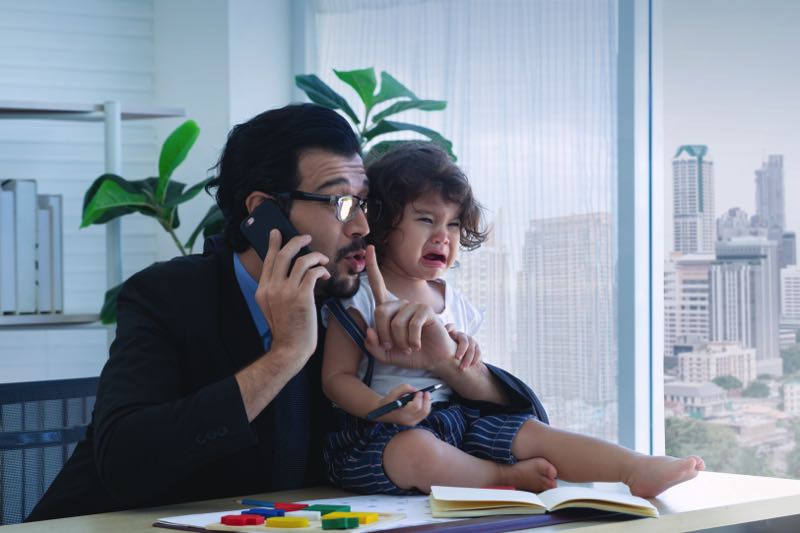
What isn’t talked about enough at the school gates or in dad-focused parenting groups is how this crisis forces fathers to drastically alter their careers and financial stability. When your child is in absolute distress, suffering from panic attacks, and physically cannot be left at the school gates, someone has to be at home.
The Minerva Virtual Academy research revealed the stark, unspoken reality for working fathers:
- More than a third of fathers surveyed said they had reduced their working hours to support their child at home.
- Nearly one in three fathers said they had left work altogether to manage the crisis.
- Across all the families surveyed, 42% estimated that their household had lost up to £10,000 as a result of their child’s attendance problems.
Taking a massive financial hit, stalling your career progression, and worrying about how to pay the bills while simultaneously dealing with your child’s distress and your own feelings of complete helplessness is an incredibly heavy burden to carry. It can leave dads feeling isolated, chronically stressed, and as though they are failing as both a nurturing parent and a reliable provider. Almost a quarter of parents reported physical symptoms of stress, including nausea and migraines, highlighting that this is a full-blown family health crisis.
Finding a Different Way Forward Without the Guilt
Admitting that a mainstream school setting isn’t working for your child can feel like a devastating defeat. It isn’t. It is simply recognising that the traditional, Victorian-style education system is not a one-size-fits-all model. The main hurdle for proactive dads is that the system actively hides the alternatives.
Almost 90% of families said they had not been given clear guidance about alternative education options by their schools or local authorities. When alternatives are finally discussed, the default assumption is often traditional home education. While home education works brilliantly for some, it requires parents to take on the role of a full-time teacher. If you have already had to step back from your career, taking on full-time teaching, trying to remember GCSE physics and algebra might be the last thing you have the emotional capacity or patience for.
Online Schooling
If you want your child to receive structured teaching, expert pastoral care, and regular social interaction without the overwhelming sensory and social pressures of a physical classroom, an online school is a fantastic, modern alternative. At Minerva Virtual Academy, a structured online secondary school combines learning from home with live lessons, independent study, and weekly individual mentoring.
This pathway is entirely different from expecting a parent to become the teacher. It takes the immense pressure off you, allows your child to learn at their own pace in a safe environment, and crucially, might just give you the space to get your career, your finances, and your family life back on an even keel. Seeking a different educational approach does not make you a failure as a dad; it proves you are willing to do whatever it takes to find the right environment for your child to thrive.