
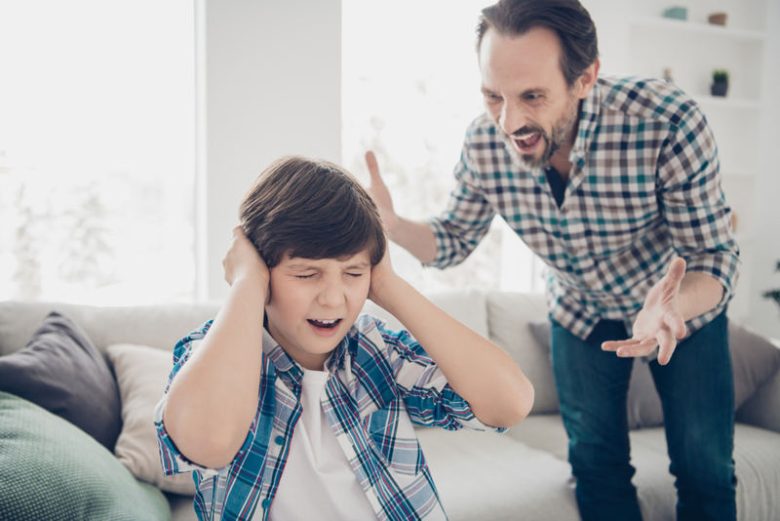
There is a particular kind of silence that comes after you have shouted at your children.
Not normal silence. Not the peaceful kind you spend half your life wishing for when the house sounds like someone has released farm animals into the hallway. This silence feels heavier. Your child goes quiet. You go quiet. The room changes.
And then the guilt arrives.
You replay what you said. You remember the look on their face. You tell yourself you had every right to be cross, because maybe you did. Maybe they had pushed too far. Maybe you had asked calmly five times. Maybe you were tired, late, stressed, hungry, worried about money, trying to cook dinner, answering a work message and dealing with a child who had chosen that exact moment to go fully feral.
But still, you shouted.
And now you are standing there with that horrible feeling in your chest, knowing you cannot unsay it.
This article is not about pretending dads should be calm, saintly parenting robots. No one is. Every parent has a breaking point. The important bit is what happens next.
What Shouting Can Feel Like To A Child
When a child gets shouted at, they are not always hearing the careful point you think you are making.
You might be trying to say, “That behaviour is not acceptable.”
They might be hearing, “Dad is scary right now.”
Children’s brains are still learning how to manage big feelings, read situations and understand danger. When an adult suddenly raises their voice, especially an adult they rely on for safety, their body can react as if there is a threat. That can mean fight, flight, freeze or fawn.
Some children shout back. That does not always mean they are being disrespectful. Sometimes it is their nervous system meeting fire with fire.
Some burst into tears.
Some go completely blank.
Some become overly apologetic, trying to fix the situation as quickly as possible.
Some seem unaffected, but then become clingy, withdrawn or difficult later.
This matters because shouting does not usually help a child learn the lesson in the moment. Fear gets in the way. The message becomes blurred by the volume, the face, the tension and the shock.
That does not mean one bad moment ruins your child. It does not. Children are not made of glass. But repeated shouting, especially when it includes shame, insults or fear, can damage trust and make home feel less emotionally safe. The American Academy of Pediatrics warns that harsh verbal discipline can be ineffective and harmful, particularly when it causes shame or emotional pain.
So no, you do not need to spiral into thinking you have destroyed everything.
But you do need to repair it.
The Guilt Afterwards Is Not Useless

The guilt after shouting can be brutal.
You might feel like you have failed. You might think, “I’m becoming the kind of dad I never wanted to be.” You might remember moments from your own childhood. You might feel ashamed that a small child managed to drag that level of anger out of you.
But guilt is not always the enemy.
Shame says, “I am a terrible dad.”
Guilt says, “That was not the dad I want to be.”
There is a difference.
If you are reading something like this because you want to do better, that matters. It means you care. It means your conscience is working. It means you are not shrugging it off and expecting your child to carry the emotional weight of your outburst.
Good dads still lose their temper. Good dads still get overwhelmed. Good dads still have moments they wish they could rewind.
What makes the difference is whether you take responsibility afterwards.
Not with a grand speech. Not with dramatic self-punishment. Not by making your child reassure you.
Just by going back in, calmly and honestly, and showing them that the relationship is safe.
Do Not Rush Straight Into The Lesson
One of the biggest mistakes after shouting is trying to carry on with the original point too quickly.
You are still angry. They are still upset. Everyone’s system is still buzzing. That is not the moment for a lecture about shoes, homework, screen time, lying, fighting with siblings or whatever started it.
First, calm your own body down.
Step into another room if it is safe to do so. Take a minute. Breathe properly. Put your hands on the kitchen counter. Get a glass of water. Say nothing for a moment rather than saying something worse.
This is not weakness. It is control.
Children need boundaries, but they also need adults who can come back from anger without making the whole room feel unsafe.
Once you are calmer, return to them.
Not six hours later if you can help it. Not after pretending nothing happened. Children often know when something has gone wrong, even if they cannot explain it. Leaving them alone with that feeling can make the moment seem bigger than it needs to be.
Say Sorry Without Handing Over The Boundary

A proper apology to a child does not mean they were right. It does not mean there are no consequences. It does not mean you have lost authority.
It means you are taking responsibility for your behaviour.
You can say:
“I was right to be cross about what happened, but I was wrong to shout like that.”
That sentence is important because it separates the boundary from the outburst.
Your child still needs to know that hitting their brother was wrong, or running into the road was dangerous, or speaking to someone like that was not acceptable.
But they also need to know that adults are responsible for how they handle anger.
Try something simple:
“I’m sorry I shouted. I got too angry and I frightened you. That wasn’t okay. I love you, and we’re alright.”
That is enough.
Do not add, “But you made me shout.”
Do not say, “I wouldn’t have shouted if you had listened.”
That turns the apology into blame. It teaches them that your loss of control was their responsibility.
It was not.
Their behaviour may have needed correcting. Your shouting is yours to own.
Help Them Feel Safe Again
After shouting, your child may not immediately want a cuddle or a chat. That is okay.
Some children need closeness. Some need space. Some need to test whether you really are calm again.
You can offer safety without forcing it.
“I’m here when you’re ready.”
“Do you want a cuddle, or do you want a bit of space?”
“We’re okay. I’m not angry like that now.”
For younger children, physical reassurance can help if they want it. Sit near them. Soften your voice. Get down to their level. Let your face show that the storm has passed.
For older children, the repair may need more dignity. They might not want a big emotional moment. They might prefer a quieter apology later, when no one else is around.
The point is not to make yourself feel better as fast as possible. The point is to help them feel loved and secure again.
Harvard’s Center on the Developing Child stresses that supportive relationships with caring adults can buffer children’s stress responses and support resilience.
That is what repair is. It is not pretending the shouting did not matter. It is showing them that difficult moments can be mended.
Talk About What Happened Once Everyone Is Calm

Later, when the emotional temperature has dropped, you can return to the original issue.
This is where you make the distinction clear.
“I want to talk about what happened earlier. You were not in trouble because I was in a bad mood. You were in trouble because you did something dangerous.”
Or:
“I should not have shouted. But we still need to talk about the way you spoke to your mum.”
This teaches something powerful.
It teaches them that feelings are allowed, but behaviour still matters.
It teaches them that adults can apologise without giving up the job of parenting.
It teaches them that love does not disappear during conflict.
And it teaches them a skill they will need for the rest of their lives: how to repair after getting something wrong.
Because your child will lose their temper too. They will say things they regret. They will hurt people they love. They will need to know what to do afterwards.
You are not just fixing this moment. You are modelling the way back.
Look At What Pushed You There
After things have settled, it is worth asking yourself what really happened.
Not to excuse it. To understand it.
Were you exhausted?
Were you trying to do too many things at once?
Had you ignored your own stress all day until one small thing tipped you over?
Is this happening often?
Is there a particular behaviour from your child that always seems to push the same button?
Sometimes shouting is about the child’s behaviour. Sometimes it is about your own overload. Often, it is both.
If it is becoming a pattern, that needs attention. Not because you are a monster, but because your home cannot run on everyone walking around waiting for the next explosion.
You might need more breaks. You might need to talk to your partner properly. You might need to change routines, lower expectations, get more sleep, spend less time trying to parent while distracted, or get support if your anger feels bigger than you can manage.
There is no shame in that. The shame would be noticing the pattern and doing nothing.
Your Child Does Not Need Perfect

Here is the part worth holding onto.
Your child does not need a perfect dad.
They need a dad who comes back.
A dad who can say, “I got that wrong.”
A dad who does not make them responsible for adult anger.
A dad who can be firm without being frightening.
A dad who keeps learning.
You cannot take the shouting back. None of us can. Once it has happened, it has happened.
But you can change what it means.
You can make it a moment where your child learns that people can lose their way and still repair. That anger does not have to end in distance. That apologies matter. That love is still there after the noise.
And perhaps, quietly, you learn something too.
Not that you are a bad dad.
That you are a human one.
And a human dad who is willing to repair is still a dad worth trusting.