
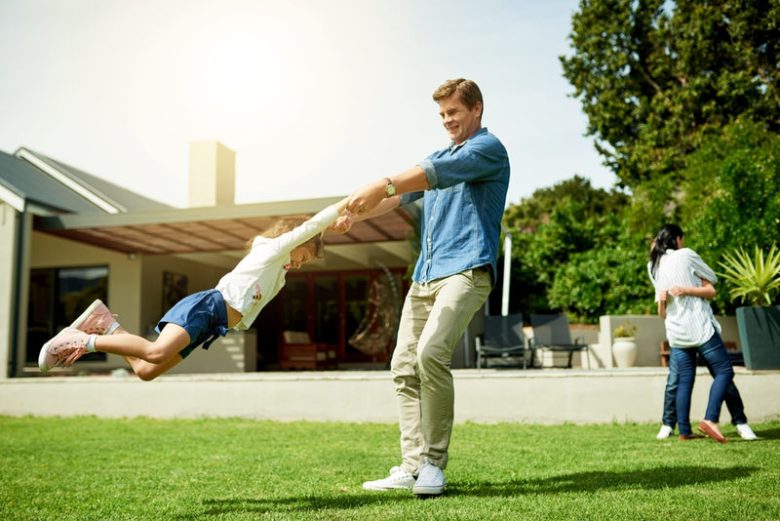
You wait all week for a bit of decent weather, finally get a sunny afternoon… and within ten minutes the kids are back inside asking for a screen.
It’s not that they don’t want to be outside. It’s that “go play in the garden” isn’t a plan — it’s a vague suggestion that lasts about three minutes before boredom kicks in.
The trick isn’t to create some elaborate activity that takes half an hour to set up. It’s having a handful of quick, low-effort games you can throw together on the spot. The kind that feel like a proper activity, but don’t leave you doing all the work.
Here are a few that actually work.
Obstacle Course (Using Whatever You’ve Got)
This is the easiest win, and it works for almost any age.
Grab whatever’s nearby — cones, footballs, garden chairs, sticks, even shoes — and throw together a quick route. Crawl under this, jump over that, run around something, balance along something else.
You’re not building Ninja Warrior. You’re just creating enough structure to make it feel like a challenge.
Why it works is simple: kids love anything that feels like a course or a mission. It gives them a clear goal, and they’ll naturally start timing themselves, racing each other, or trying to beat their own score.
You can set it up in under five minutes and leave them to it.
Shadow Tag
This is one of those games that only really works on a sunny day, which makes it perfect here.
Instead of tagging each other, you tag someone’s shadow with your foot. If you step on their shadow, they’re “it.”
It sounds simple, but it completely changes how kids move. They start dodging, twisting, and watching the ground instead of just sprinting in straight lines.
It’s also a bit less chaotic than full-on tag, which helps if you’ve got a smaller garden. Variations of tag are widely recommended as quick, no-prep outdoor games because they’re easy to learn and get kids moving instantly .
Water Relay
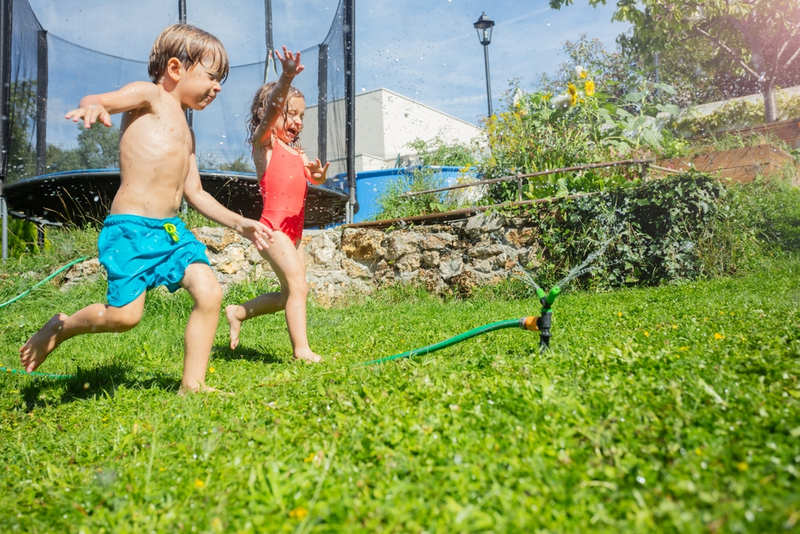
If it’s properly warm, bring water into it — but keep it simple.
Two buckets, one filled with water, one empty. Add a cup, sponge, or even just hands, and the goal is to transfer as much water as possible from one to the other.
You can turn it into a race if there’s more than one child, or just a solo challenge to see how quickly they can fill the second bucket.
There’s no complicated setup, no rules to explain, and no need to buy anything. Just water and something to carry it with.
It works because it feels like play, not a “game” — and anything involving water automatically holds attention longer.
Red Light, Green Light
Another classic that takes about ten seconds to explain.
One person stands at one end of the garden and calls out “green light” to let everyone move, and “red light” to make them freeze. If you move when you shouldn’t, you go back to the start.
That’s it.
Games like this are often used because they build coordination and reaction while staying simple enough for mixed ages .
The real benefit is that it burns energy without turning into chaos. There’s structure, but it still feels like fun.
Scavenger Hunt
You don’t need printed sheets or anything fancy.
Just call out a few things:
- Something green
- Something round
- Something that smells nice
- Something longer than your arm
Send them off to find each one.
You can make it competitive or keep it relaxed, depending on the mood.
Simple scavenger hunts are known to get kids moving, exploring, and thinking without needing any real setup . That’s exactly what you want when you’re trying to keep things low effort.
Target Toss With Household Items
You don’t need a proper game set for this.
Grab a few buckets, plant pots, or even washing-up bowls. Spread them out and assign points depending on how far away they are.
Then use whatever you’ve got to throw — tennis balls, soft toys, rolled-up socks.
Kids take turns aiming for the targets, adding up scores as they go.
This kind of game works well because it gives a clear objective and a bit of competition without needing much space or setup. Even simple setups like bottles or cups can be used as targets for throwing games .
Animal Races
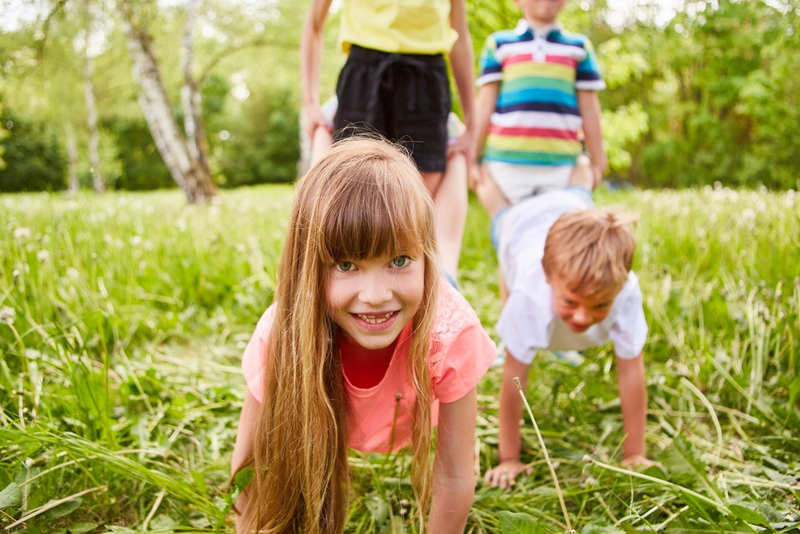
This is chaos in the best possible way.
Mark out a start and finish line, then call out how they have to move:
- Bunny hops
- Crab walk
- Frog jumps
- Bear crawl
It’s ridiculous, which is exactly why kids love it.
Animal races are often used in outdoor play because they work different muscle groups while keeping things playful and creative .
It’s also one of those games where they’ll start making up their own variations once you get it going.
“I Spy” – But Make It Active
Standard “I Spy” is fine, but it’s not exactly going to keep them moving.
Instead, once they guess the item, they have to run and touch it.
You can make it more interesting by setting rules:
- Only natural objects
- Only things of a certain colour
- Only things smaller than your hand
Even simple games like this work well outdoors because they require no setup and can be adapted on the fly .
It’s an easy way to stretch five minutes of activity into twenty.
DIY Sports Day
You don’t need equipment, medals, or a full event plan.
Just pick a few quick challenges:
- Sprint race
- Long jump (from a standing start)
- Throwing distance
- Balancing something while walking
Keep score if they’re into it, or don’t if they’re not.
The key here is variety. Instead of one game that burns out quickly, you’ve got a few different mini-games back to back.
It keeps things moving without needing much effort from you.
Freeze Dance (Outdoor Version)
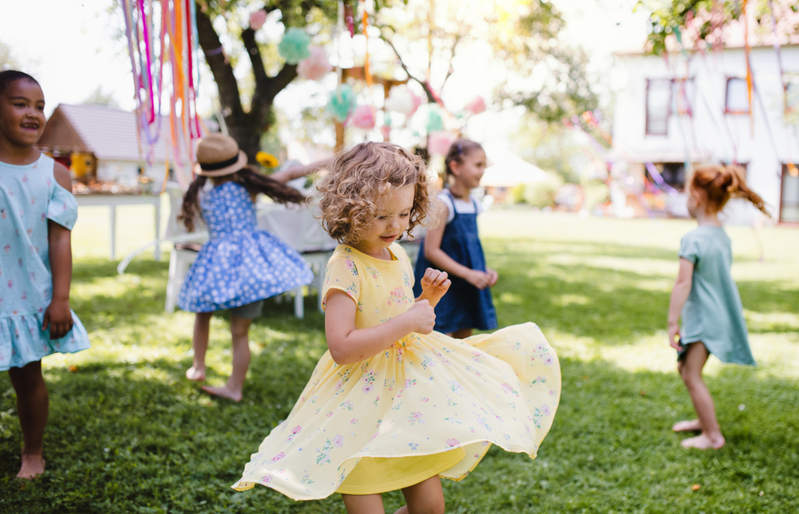
If you’ve got a phone and a speaker, you’ve got everything you need.
Play music, let them run or dance around, and when it stops they freeze. Anyone still moving does a forfeit — star jumps, a silly dance, whatever you fancy.
It’s simple, but it works because it breaks up the usual running-around pattern with something a bit different.
And importantly, it doesn’t rely on space. Even a small garden is enough.
Why These Work
The common thread with all of these isn’t creativity — it’s simplicity.
Kids don’t need perfectly planned activities. They need something clear, quick to start, and easy to understand.
That’s why classic outdoor games have stuck around for years. They’re easy to learn, require little to no setup, and get kids moving straight away .
If a game takes too long to explain or set up, you’ve already lost them.
You’re not trying to recreate a school sports day or become full-time entertainment. You’re just giving them a starting point.
Once they’re moving, they usually take over anyway — changing rules, adding challenges, dragging siblings into it, or turning one game into something completely different.
And that’s the moment you’re aiming for: when they stop asking for screens because they’ve forgotten about them.