

There are many things that unite parents – sleepless nights, school runs, and wondering why kids are so good at finding biscuits but hopeless at finding their shoes. But perhaps the strongest bond of all is our collective need for coffee.
The question is: how do you actually make it? A quick jar of instant will do in an emergency, but if you’re going to be drinking several cups a day – and let’s face it, most of us are – it’s worth having a decent machine in the kitchen. The problem is, there are so many different types that it’s hard to know where to start.
This isn’t a buyer’s guide full of jargon and sales pitches. I’m not recommending any specific models or brands. This is a straightforward look at the main types of coffee machines out there, what they do well, what they don’t, and which sort of coffee drinker – or parent – they actually suit.
Pod Machines
Pod or capsule machines have exploded in popularity over the last decade, and it’s easy to see why. You drop in a capsule, press a button, and within a minute you’ve got a coffee that looks and tastes a bit like what you’d buy in a café.
For tired Dads, convenience is the big selling point. There’s very little mess and very little thinking required. Even if you’ve been up all night with a teething baby, you can just about manage to slot a pod in and press go.
The downsides are cost and choice. Pods are more expensive per cup than ground coffee or beans, and unless you buy a machine that accepts third-party capsules, you’re often tied to one brand’s range. There’s also the environmental issue: all those little pods have to go somewhere, though some companies now run recycling schemes.
Best for: Parents who want fuss-free but better than average coffee at the push of a button.
Filter Coffee Machines
Filter machines are the old faithful of the coffee world. They’re simple: water drips through ground coffee into a jug, giving you a batch big enough to last the morning.
The main advantage here is quantity. If you’re the kind of household where both parents drink a lot of coffee – or you like to have a pot ready for whenever you walk into the kitchen – a filter machine makes life easy. They’re also relatively cheap and don’t take up too much space, plus, some can be set to turn on an our before you wake up, giving you freshly brewed coffee as you roll out of bed.
The flavour is milder than espresso-based machines, and you won’t get frothy milk drinks like cappuccinos or lattes. But for straightforward black coffee in generous amounts, they’re hard to beat.
Best for: Families who drink coffee in steady supply and like to keep a jug on standby.
French Press (Cafetiere)

The French press is one of the simplest and most affordable ways to make coffee. Add your ground coffee, pour in hot water, let it brew for a few minutes, then push down the plunger.
It has a certain ritualistic charm – waiting for it to steep, pressing slowly, pouring carefully. It’s great if you enjoy the process as much as the drink. It’s also portable and doesn’t need electricity, so it’s handy for camping trips or for keeping at the office.
The catch is that it can be a bit hit and miss. Leave it too long and it’s bitter; not long enough and it’s weak. You may also find some grit in your cup if the grind isn’t quite right. It’s a process that can be perfected though, so coffee loving Dads who like to tinker and swap tips might enjoy it.
Best for: Occasional coffee drinkers who like a simple, hands-on brew without spending much.
Stovetop Moka Pot
If you’ve ever been to Italy, you’ll have seen these little aluminium pots sitting on hobs. The moka pot is a classic, producing a rich, espresso-like coffee by forcing boiling water up through the grounds.
They’re cheap, sturdy, and deliver a strong, full-bodied brew. For parents who enjoy the idea of something more traditional – and don’t mind waiting a little longer – the moka pot is a brilliant option.
The drawbacks are that it’s not as quick as a pod machine, it only makes a few cups at a time, and there’s no milk frothing. But if you like strong, no-nonsense coffee, this is a solid choice.
Best for: Coffee lovers who want something strong and authentic without breaking the bank.
Bean-to-Cup Machines
These are the dream machines for many coffee enthusiasts. You pour in fresh beans, press a button, and the machine grinds them and makes you a barista-style coffee. Some models even froth the milk automatically.
The quality is excellent – nothing beats the taste of freshly ground beans – and it’s all done with minimal effort. If you want café-level drinks at home, this is the way to go.
But be warned: they’re not cheap. Expect to spend several hundred pounds at least, and more if you want extra features. They’re also bulky and require regular cleaning.
Best for: Serious coffee drinkers who want high-quality, fresh coffee at home every day, and don’t mind paying for it.
Manual Espresso Machines
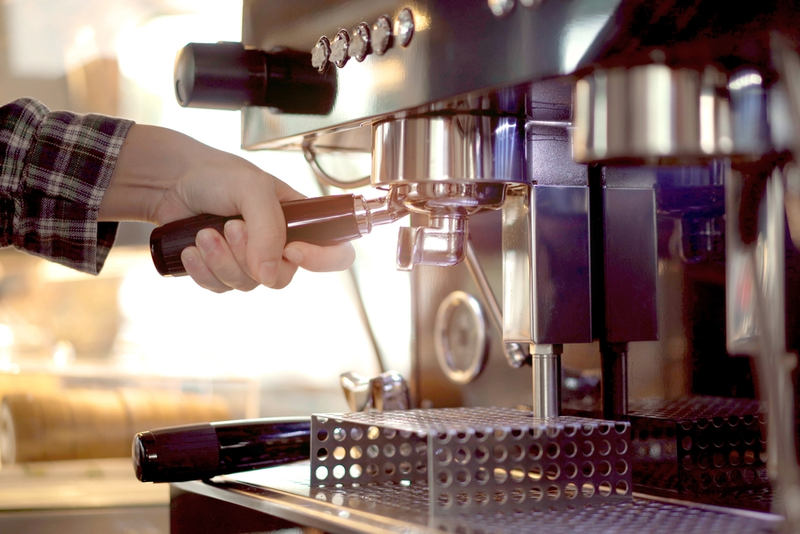
For those who really want to get involved, there’s the traditional espresso machine. You grind the beans (ideally fresh), tamp them into the portafilter, lock it into place, and pull your own shot. With a milk wand attached, you can steam milk for lattes, cappuccinos, or flat whites.
This gives you the most control over flavour and texture, but it also takes practice. It’s a hobby as much as a drink-making process. If you like the idea of experimenting, learning techniques, and even showing off a bit, it can be hugely satisfying.
However, it’s not the machine for bleary-eyed mornings when you just want something fast. And they don’t come cheap.
Best for: Coffee hobbyists who enjoy the process as much as the result.
Other Things to Consider
Aside from the machine type, there are a few practical things to think about.
- Budget: A French press might cost under £20, while a bean-to-cup setup can easily pass £500.
- Space: Some machines are compact, but others are huge. If your kitchen is already full of lunchboxes and snack tubs, size matters.
- Maintenance: Pod machines are low effort, while bean-to-cup and espresso machines need regular cleaning and descaling.
- Eco-friendliness: Reusable methods like cafetieres and moka pots win here. Pods are improving but still an issue unless you use recyclable options.
So, Which One’s Brewing in Your Kitchen?
Choosing a coffee machine really comes down to priorities.
If speed and convenience are top of the list, a pod machine makes life simple. If you want quantity, go for a filter machine. For something cheap and cheerful, a French press does the job. If you fancy a stronger brew, the moka pot delivers. For quality and indulgence, bean-to-cup is hard to beat, while manual espresso machines are perfect for those who see coffee-making as a craft.
Whatever you choose, remember this: the biggest challenge isn’t the machine you buy, it’s actually getting to drink your coffee while it’s still hot. That, sadly, is a battle no machine can win for you.