

There is a particular kind of optimism involved in announcing that you will read one bedtime story. You choose a book, settle down and imagine everyone will be asleep shortly afterwards.
Then your child spots another book. And remembers a question about space. And decides that the voice you gave the rabbit yesterday was better.
Still, sharing a story is a lovely part of the evening. For children aged five to seven, there is plenty to choose from, whether they want pictures on every page or a longer adventure to return to tomorrow.
I wouldn’t rush to retire the picture books just because school has started. Equally, you can read a chapter book aloud before your child is ready to tackle it alone. Bedtime doesn’t need to become an extra reading lesson.
Here are six books and series I’d put on the shortlist.
The Smeds and the Smoos – Julia Donaldson and Axel Scheffler
If your bookshelves already contain a well-thumbed copy of The Gruffalo, this is a good way to take the bedtime routine somewhere different. Into space, for a start.
The red Smeds and blue Smoos have been brought up to avoid one another. When a young Smed and Smoo fall in love, their families are thoroughly unimpressed. The story follows what happens when the younger generation questions the rules everyone else has accepted.
Donaldson’s rhymes make it a natural choice for reading aloud, while Scheffler’s alien illustrations give children plenty to examine. It has a warm message about accepting differences, wrapped up in a colourful space adventure.
I’d particularly suggest this for the younger end of Key Stage 1, or any child who still enjoys a complete picture-book story before lights out. You may want to practise the title first. Tired dads and similar-sounding alien names are a risky combination.
Rabbit and Bear – Julian Gough and Jim Field
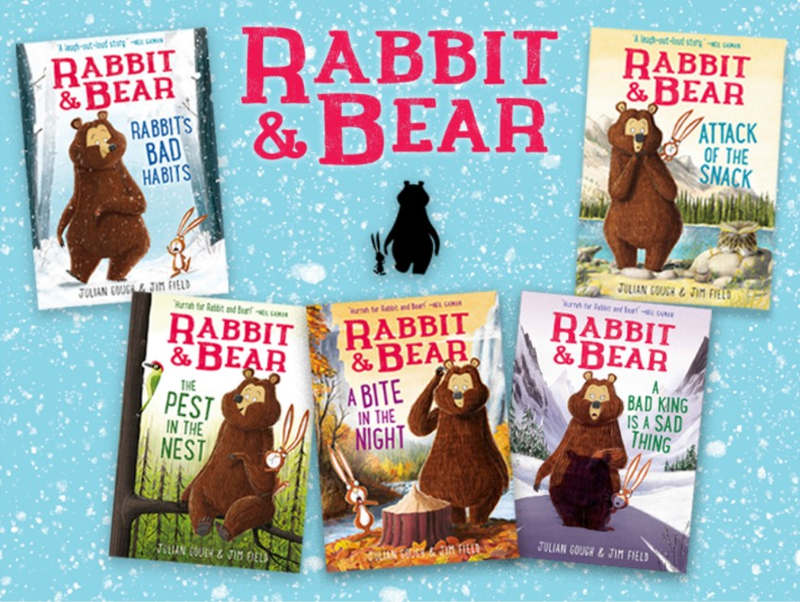
A little toilet humour can do a remarkable amount of work when you are trying to interest a child in a book. Rabbit and Bear understands the assignment.
Start with Rabbit’s Bad Habits, in which Bear wakes early from hibernation and decides to build a snowman. Rabbit promptly wants to build a better one. An avalanche and a hungry wolf complicate matters, and having a friend suddenly looks rather useful.
There is warmth beneath the silliness, with friendship at the centre of the story. Jim Field’s illustrations also make this an inviting step beyond picture books, without confronting children with page after page of uninterrupted text.
I’d choose this series for a child who enjoys funny animal adventures. You can read a section together each evening and return to the same characters in later books. Just be prepared for the poo-related bits to receive considerably more attention than the thoughtful ones.
Isadora Moon – Harriet Muncaster
Choosing a school is complicated enough without having to decide between fairies and vampires.
That is Isadora’s problem in Isadora Moon Goes to School. Her mum is a fairy, her dad is a vampire, and she has inherited something from both. Working out where she belongs gives the magical story a concern that children may recognise, even if their own school has a fairly ordinary uniform policy.
Harriet Muncaster writes and illustrates the series, with distinctive pink-and-black artwork accompanying the chapter-book format. Oxford recommends the books for ages five to eight, making them a sensible option for this age group.
I’d start here if your child likes magic but you want something more approachable than a hefty fantasy novel. Read it aloud, share the reading, or let a confident reader take over when they fancy it. There is no requirement to hand in your bedtime-story duties as soon as they can read.
Claude – Alex T. Smith
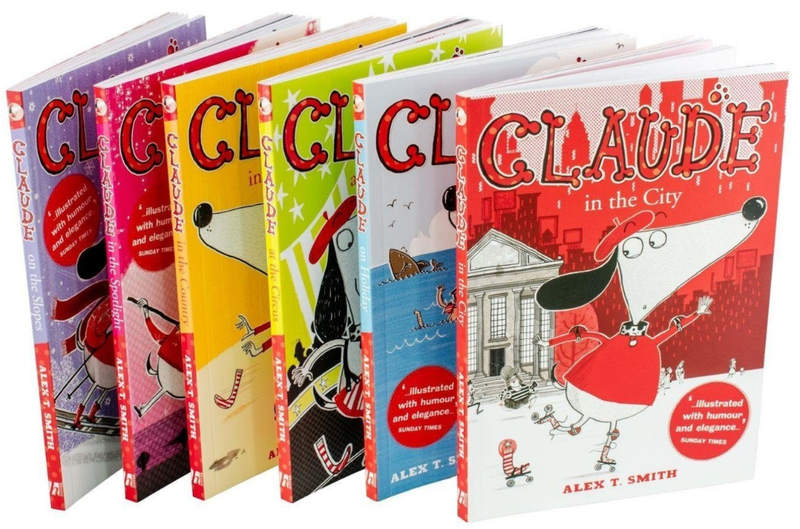
Claude is a dog whose outings tend to get rather more interesting than expected. His companion is called Sir Bobblysock, which is already a promising start for a children’s book.
In Claude in the City, the pair head out while Claude’s owners, Mr and Mrs Shinyshoes, are at work. A visit involving shopping, a café and a museum takes an unexpected turn when Claude foils a robbery.
Alex T. Smith’s illustrations appear on every page, so there is plenty to look at while you read. The series is aimed at new readers, and the combination of pictures and comic adventures makes it worth considering when your child wants a longer story but still values the artwork.
I’d recommend Claude for children who enjoy absurd characters and ordinary situations going slightly sideways. There are further outings to choose from, including Claude at the Circus and Claude on Holiday. Clearly, this dog has a better social calendar than most parents.
The Owl Who Was Afraid of the Dark – Jill Tomlinson
Plop is a baby barn owl who is frightened of the dark. This is inconvenient for an owl, but a fairly understandable position from the perspective of a small child staring into an unlit bedroom.
His mum encourages him to discover what other people like about the night. Encounters involving fireworks, camping and stargazing gradually offer him a different view of darkness.
Jill Tomlinson’s story, illustrated by Paul Howard, is a gentle choice for reading together, particularly if nighttime worries have entered the bedtime conversation. Plop gets time to explore his fear, giving you something to talk about without turning the evening into a lecture about being brave.
Check which edition you pick up: there is a longer chapter-book version and an abridged picture book. I’d choose the former for an adventure spread across several bedtimes, and the latter for children who prefer more pictures and a shorter telling.
The Lion Inside – Rachel Bright and Jim Field
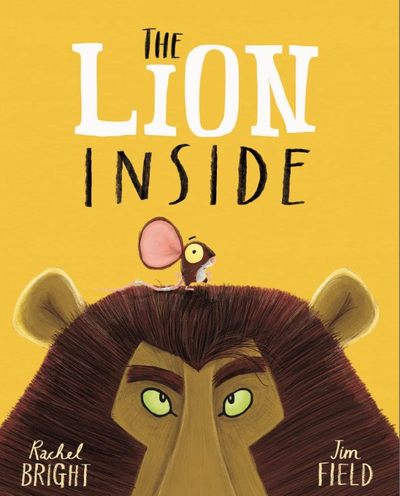
Some children seem happy to announce themselves to the entire room. Others would rather wait until the room has emptied.
The Lion Inside follows a small mouse who is tired of being overlooked and decides he needs to learn to roar like a lion. What he discovers is that being big and loud doesn’t mean you never feel afraid.
Rachel Bright’s rhyming text and Jim Field’s illustrations make this a strong read-aloud choice. It is a picture book about confidence and finding your voice, with an animal story to keep things moving.
I’d suggest it for children who enjoy stories about being brave, including those who are finding school or new friendships a bit daunting. You can leave the message to the mouse rather than adding a parental speech afterwards. Also, if you’re providing the lion’s voice, remember the neighbours. Enthusiasm is admirable; a full wildlife-documentary performance through the bedroom wall is less so.
Let Them Choose Tomorrow’s Story
You don’t need all six. Borrow a couple from the library, see which one gets requested again and follow your child’s interests from there.
Some evenings will suit a whole picture book. Others will suit a few pages of an ongoing adventure. I’d be guided by how tired everyone is, including the person doing the voices.
And if the favourite ends up being the same book for a fortnight, that’s fine too. Although you should probably agree on the rabbit’s voice early. Apparently, continuity matters.