
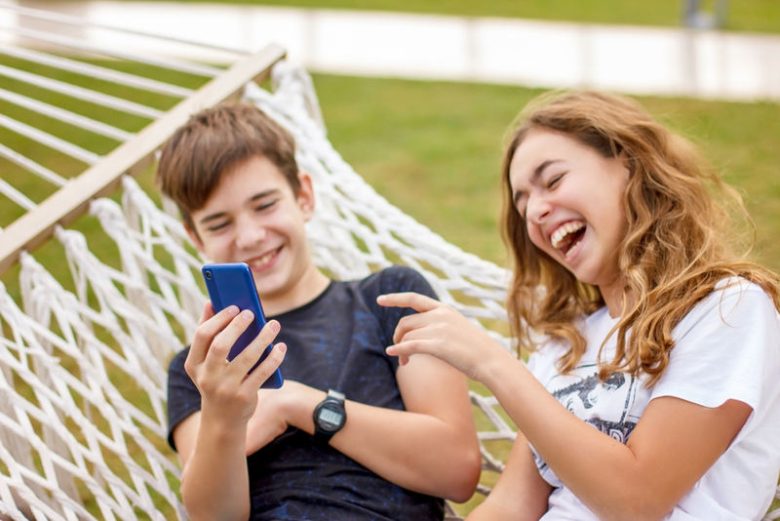
The other day I found myself half-watching what my child was scrolling through. Not in a heavy-handed “what are you looking at?” kind of way—more just being nearby while the videos flicked past.
You know the sort. Fast, loud, over in seconds. Someone shouting, someone reacting, someone being made the centre of a joke they didn’t sign up for.
After a few minutes, it started to feel uncomfortable. Not because any one video crossed a line on its own, but because of the pattern. People weren’t really people in these clips. They were props. Obstacles. Punchlines. Their reactions were the content, and their feelings didn’t seem to get a second thought.
That’s the bit that stuck with me, because this isn’t just entertainment our kids are watching—it’s a steady stream of examples showing them what’s normal, what’s funny, and what gets rewarded.
I think it is warping our children’s idea of what is right and wrong.
The New Rules Social Media Rewards
Spend any time watching short-form content and certain patterns become obvious. The clips that travel furthest tend to revolve around getting a reaction, usually by putting someone else in an awkward, uncomfortable, or outright unfair situation.
What’s missing is just as important as what’s there. There’s rarely any pause to consider how it felt for the person on the receiving end, and almost never any sense of what happened afterwards. The reaction is the product, and everything else is irrelevant.
Over time, that shifts the emphasis away from empathy and towards outcome.
- Did it get a laugh?
- Did it get shared?
- Then it worked.
That’s the only metric that seems to matter.
And because everyone is chasing that same outcome, the content naturally escalates. Each video has to go a bit further than the last to stand out—louder, more intrusive, more outrageous. It creates a cycle where other people are increasingly treated as content rather than individuals, and where pushing boundaries becomes part of the process rather than something to question.
When Attention Becomes The Goal
Kids aren’t being explicitly told to behave like this, but they are constantly seeing what gets rewarded. The message isn’t spoken, but it’s clear enough: attention equals success. Not respect, not kindness, not even creativity in the traditional sense—just visibility.
The problem is that the consequences rarely appear alongside the content. What they see is the action and the reaction, followed by likes, shares, and comments. They don’t see the fallout, the conversations off-camera, or the longer-term impact on the people involved. It creates a distorted version of reality where the benefits are immediate and visible, and the downsides are either hidden or delayed.
That quietly reshapes how behaviour is judged. Instead of asking “is this right?”, the question becomes “does this work?” And in that environment, going too far doesn’t necessarily feel like a mistake. It can start to feel like a strategy.
A Real Example Of How That Plays Out
You don’t have to look far to see how this dynamic plays out in real life.
Take Mizzy, who built a following in 2023 by pushing well past what most people would consider acceptable. His videos included walking into strangers’ homes uninvited while families were inside, running off with an elderly woman’s dog, asking random people if they “want to die”, and harassing members of the public for a reaction.
It worked. The more extreme the behaviour, the more attention it got—something he openly acknowledged, saying that “controversy… is the best way to blow up on social media.”
There was backlash, arrests, and eventually a criminal behaviour order restricting what he could do. For a while, it looked like that might force a change.
After serving time, he spoke openly about turning things around. He became a father, said it had changed his outlook, and talked about wanting a normal life—working in construction, going back to college, and staying away from the kind of content that got him into trouble in the first place.
But that’s where the bigger issue comes in.
Because when attention is tied so strongly to extreme behaviour, stepping away from it often means stepping away from visibility altogether. And over time, that pull back towards what worked before becomes hard to ignore.
More recently, similar patterns have started to reappear from Mizzy. Causing disruption in public, cycling through shops, pulling wheelies around people, all designed to get a reaction.
That’s not just about one person making the same mistake twice. It’s about how difficult it is to walk away from a system that rewards the very behaviour you’re trying to leave behind.
The Bit That Should Worry Us As Parents
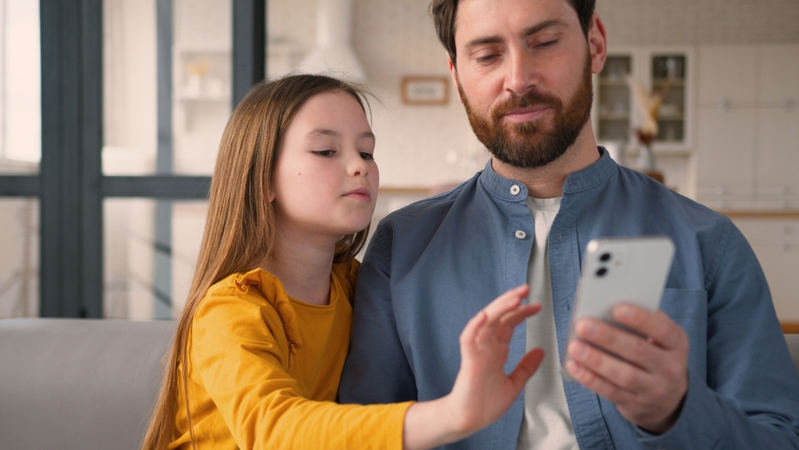
The concern isn’t that every child watching this is going to copy it directly. Most won’t. The issue is more subtle than that. It’s about what repeated exposure does to their sense of what’s normal.
When the same patterns show up again and again—people being treated as props, boundaries being pushed for laughs, reactions being valued over feelings—it starts to shape expectations. Not in a dramatic way, but gradually. Kids begin to absorb the idea that other people’s discomfort isn’t necessarily a problem if it leads to attention, or that being noticed matters more than being considerate.
That doesn’t mean they suddenly lose their sense of right and wrong entirely, but it can blur the edges. It can make certain behaviours feel less serious than they are, or make empathy feel less central than it should be. And because it’s happening in the background, it often goes unnoticed until it shows up somewhere else.
Where That Leaves Us As Parents
There isn’t a simple fix for any of this. Social media isn’t going anywhere, and trying to block it out entirely isn’t realistic for most families. But there is a difference between letting it run unchecked and helping kids make sense of what they’re seeing.
That starts with paying attention to the content itself, not just the screen time. Watching with them occasionally, noticing what gets a reaction, and using those moments as a way into a conversation rather than a lecture. Simple questions tend to go further than rules.
Asking questions:
- “Do you think that person was actually okay with that?”
- “Would it still be funny if it happened to you?”
- “Why do you think that got so many views?”
This can help shift the focus back towards empathy.
It also helps to draw a clear line between attention and respect. Social media often blurs the two, but they’re not the same thing. Someone can be widely seen without being widely respected, and understanding that difference is important. Because in the end, the issue isn’t just what our kids are watching. It’s what they’re learning from it.
The internet might not be deliberately teaching them values, but it is showing them, over and over again, what gets rewarded. And if the loudest examples are the ones that ignore boundaries or treat people like props, then it’s up to us to make sure those messages don’t go unchallenged.