
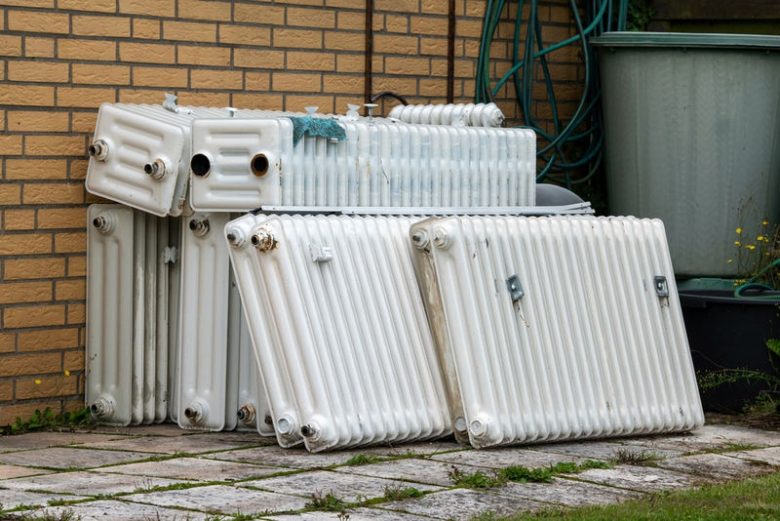
If you’ve ever wrestled a radiator off the wall and thought, this has to be worth something, you’re not wrong. Old radiators can have a scrap value in the UK, but the amount you’ll get depends heavily on what the radiator is made from, how your local yard grades it, and what metal prices are doing that week.
The good news is that radiators are basically “money-shaped” because they’re metal. The less good news is that not all radiators are equal, and some are mostly the kind of metal that’s worth pennies compared to the juicy stuff.
What Most UK Radiators Are Made From
For most homes, the standard “panel radiator” you’ll find upstairs, in hallways, or in bedrooms is typically mild steel. Steel radiators are common in the UK because they’re cheap to make and do the job well.
Older homes, period properties, and renovations sometimes have cast iron radiators (often the chunky, column-style ones). These are still very much a thing, especially where people want that traditional look and the slow-release heat.
You can also get aluminium radiators, but they’re less common than steel in typical UK houses.
Why does this matter? Scrap yards generally pay a lot more for non-ferrous metals like copper, brass, and aluminium, than for ferrous metals like steel and iron.
So, What’s The Scrap Value Likely To Be?

Scrap values move, and yards set their own prices, so there isn’t one single “radiator rate”. But we can talk about the real-world pattern.
Steel panel radiators are usually low value
If your radiator is a standard modern-ish steel panel, it’s usually treated as light iron/steel scrap. Ferrous scrap is priced far lower than copper/brass.
To put that gap into perspective, one UK price list from December 2025 shows copper in the £6–£7/kg range and brass around £3–£4/kg, while many ferrous categories are far lower.
Another UK recycler price list from the same time shows “heavy iron” around £130 per tonne – that’s about 13p per kg – and “Ali/Copper Rads” around £2,400 per tonne – about £2.40 per kg.
So if the yard sees your radiator as plain steel, it’s typically beer money at best unless you’ve got a big pile of them. If it’s graded as something with copper/aluminium value, it can be meaningfully better per kilo.
Cast iron radiators can be heavier, but still not high value as scrap
Cast iron radiators weigh a ton (sometimes feels like literally), and that can make the total payout higher than a steel panel rad simply because there’s more material. But cast iron is still a ferrous metal category, so the per-kilo price is usually not amazing compared to non-ferrous.
In fact, cast iron radiators may be worth more as a reusable/refurb project than as scrap. There’s clearly an active retail market for cast iron radiators in the UK, including Victorian-style designs. If you’ve got something attractive and intact, it can be worth checking whether it has resale value before you doom it to the scrapyard.
Copper/Brass And Mixed-Metal Radiators Are Where The Money Is
Some radiators (and related heating bits) have higher-value metals attached, like copper pipes, brass valves, and sometimes mixed-metal radiator types.
Industry price reporting also lists a specific category for “brass and copper radiators” in the thousands per tonne range during 2025. Different yards use slightly different categories and names (you’ll see “rads”, “copper rads”, “brass/copper rads”, “mixed rads”, etc.), but the idea is the same: if the yard believes there’s worthwhile non-ferrous content, you’ll generally get paid more.
How To Tell What Your Radiator is Made From
You don’t need a chemistry set. You just need a couple of quick checks.
- Try a magnet – If a magnet sticks strongly to the radiator body, you’re almost certainly dealing with steel or iron (ferrous). That usually means low value per kilo.
- Look at the style – Flat panel = very likely steel. Chunky columns with ornate bits = possibly cast iron (common in older/period homes).
- Check what’s still attached – Valves and fittings can be brass. Pipes might be copper. Those can be worth more separately, but don’t go full “scrap surgeon” unless you’re confident and safe doing it.
- Weigh the effort against the payout – A single small steel radiator might not be worth a special trip as you could literally get about £3.50.
Scrap Rules That Catch People Out

Two big ones matter for ordinary households:
- You won’t get paid cash – In England and Wales, scrap metal dealers can’t pay cash for scrap metal. Payment must be traceable (typically bank transfer or cheque). This was brought in to reduce metal theft.
- Bring ID – Dealers must verify the identity of sellers, and big operators like EMR make it clear you’ll be asked for photo ID.
So if you’re planning a “quick pop to the scrapyard”, make it slightly less quick and bring your driving licence/passport and whatever else that yard asks for.
If You’re Scrapping It, Do This First
If the scrap yard is where your rad is going, remember to drain it properly first.
Radiators can hold dirty system water. Before you move it around the house or chuck it in the car, drain it as best you can (and protect your carpets like you’re transporting an open tin of black paint). You would generally do this while taking it off the wall, but there’s always a bit left in there that catches you out.
Also, separate the “good bits” if there are any – only if you’re comfortable with it of course. Separating copper pipe and brass valves will help as they are worth more. If you take it to the yard all in one you’ll annoy everyone. The best approach is to remove, drain, and strip the rad safely, take the lot in, and let the yard grade it.
So, Is It Worth Scrapping Old Radiators?
If it’s a standard steel panel radiator: yes, it has scrap value, but it’s usually modest unless you have several, or you’re combining it with other scrap in one trip.
If it’s cast iron: it may be heavier so you might get more overall, but it’s still usually a ferrous scrap category. Consider resale/refurb potential before you scrap it.
If it’s a radiator type or pile of heating bits that a yard grades as mixed metal (copper/brass/aluminium content), that’s where scrapping can start to feel properly worthwhile.